
Solitaire Classic
Lynn Mobile Puzzle GamesCard
4.7144.00 Reviews
- Version
- 1.2.6
- Installs
- 500.00K
- Age Rating
- Everyone
Screenshots
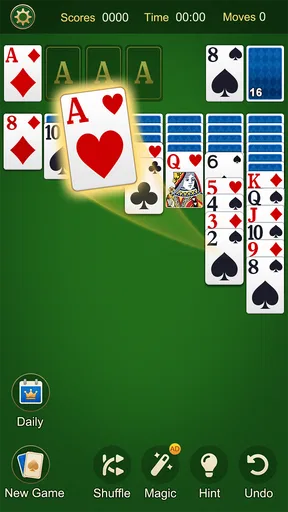
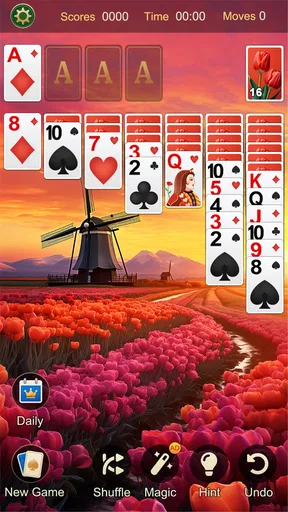
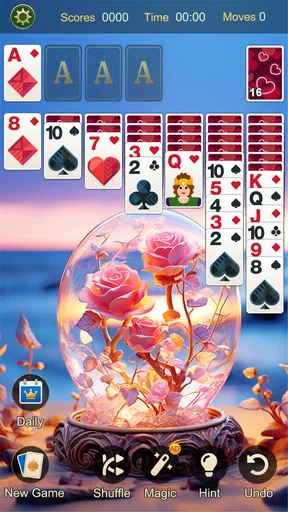
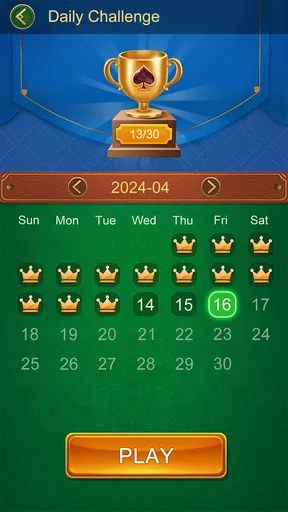
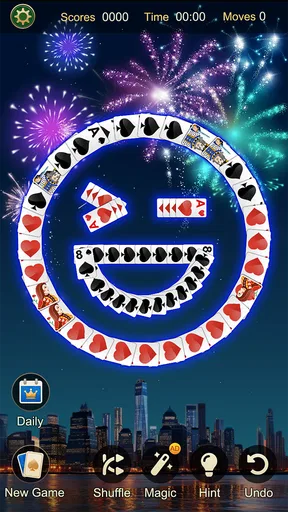
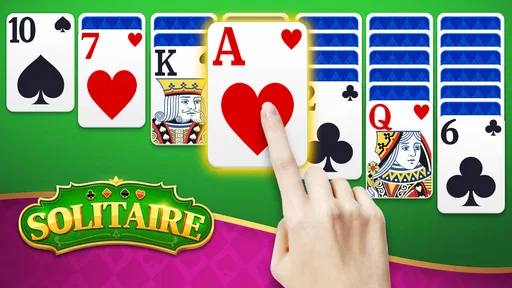
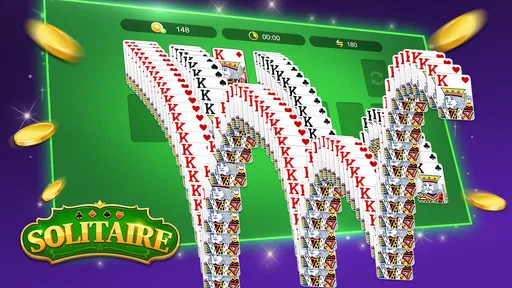
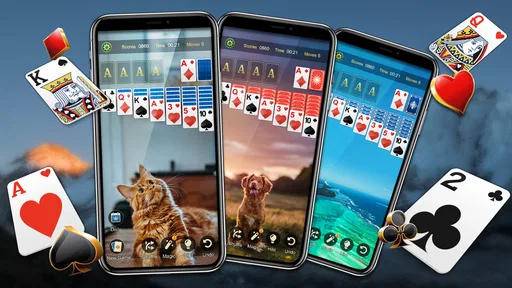
Our Review of Solitaire Classic
 Analysis by Appyee
Solitaire Classic is the kind of card game I open when I want a quiet few minutes rather than a demanding gaming session. Its central appeal is simple: it places familiar solitaire challenges inside a light romantic setting, with a seasonal Summer Event adding a reason to return. That combination gives the game a little more personality than a completely plain card table, while keeping the actual activity easy to understand.
Developed by Lynn Mobile Puzzle Games, it is a free card game for Everyone and runs on Android devices using Android 6.0 or later. The game has reached over 500 thousand installs and holds a 4.7 average from around 2.2 thousand ratings, which suggests that its straightforward approach is connecting with a substantial audience. I can see why: there is very little to learn before starting a hand, and the familiar rules make it accessible even if you have not played solitaire on a phone for years.
Why the romance layer matters more than it first appears
The most important capability here is not a complicated card system. It is the way Solitaire Classic uses a romance-themed presentation and a Summer Event to give ordinary solitaire a sense of context. The cards remain the main activity, but the surrounding theme changes how the short sessions feel. Instead of opening an entirely neutral utility-style game, I get a small piece of casual entertainment that is meant to feel warmer and more inviting.
That distinction matters because classic solitaire can become repetitive quickly. The rules are familiar, and the basic objective does not need much explanation. A theme can make the difference between playing one hand and deciding to stay for another. In my experience, the romantic framing works best when I treat it as atmosphere rather than expecting it to transform the card game into a story-heavy adventure.
The Summer Event is especially useful as a return point. Seasonal content can give a routine hand a timely purpose, even when I only have a short break. I would not choose this game solely for the event, but it helps prevent the experience from feeling like a static deck on a screen. The event is most valuable for players who enjoy checking in regularly and seeing a familiar game presented with a changing mood.
The real strength is the low commitment: the theme adds motivation without asking me to learn a new ruleset before I can enjoy the cards. That makes the game suitable for a quick pause, a quiet evening, or a short distraction while waiting somewhere.
Starting a hand is deliberately uncomplicated
Solitaire Classic is built around the kind of card play most people recognize immediately. I do not need a tutorial-heavy introduction to understand what I am supposed to do. The familiar structure lets me concentrate on the next useful move instead of learning menus, characters, or a large collection of systems.
That simplicity is also why the game feels comfortable for casual players. Someone who usually avoids strategy games can try it without feeling behind. At the same time, experienced solitaire players can get straight to the part they already enjoy: scanning the layout, opening useful cards, and deciding whether a move creates a better position or merely looks attractive.
A practical tip is to avoid moving cards just because a legal move is available. I get better results when I first look for moves that uncover a hidden card or create space for a longer sequence. In a short session, this small habit makes the game feel more thoughtful without turning it into a stressful puzzle. It also helps reveal whether I am enjoying the decision-making or simply tapping through familiar motions.
Another useful habit is to pause before committing a sequence. A move can look efficient while blocking the next card I need. I prefer to examine the available columns first, then choose the move that gives me more future options. This is a modest adjustment, but it is one of the ways a basic solitaire game can reward attention rather than automatic play.
How the presentation changes the everyday experience
The romance theme gives the game a softer identity than a traditional desktop solitaire clone. I would describe it as a mood-setting layer rather than a separate mode of play. That makes it easy to recommend to someone who likes gentle, decorative casual games but does not want an elaborate role-playing experience.
For example, I can imagine opening it during a commute when I want something more engaging than scrolling but less demanding than a competitive game. One hand gives me a clear beginning and end. If I lose, the result does not feel like a major setback; if I succeed, I get the small satisfaction of completing a familiar challenge. The seasonal framing makes that routine feel a little less mechanical.
This also makes the game a reasonable choice for players who want an offline-style mental rhythm from a phone game, though I would not assume every part of the experience works without a connection. If uninterrupted access in every situation is essential to you, a dedicated traditional solitaire app may be a safer choice. Solitaire Classic is better suited to players who value its themed presentation along with the card play.
The game is free to install, which makes trying it low-risk. It includes in-app purchase items priced from $0.99 to $29.99 each. I would approach those purchases carefully and decide first whether the basic loop is satisfying on its own. For a game designed around short, repeatable hands, spending should feel optional rather than necessary for the experience to make sense.
Where it works best in practice
I find this game works best when I treat a session as a small, self-contained pause rather than a daily task to keep up with. Before opening a hand, I decide whether I have time for one round or several; that simple boundary keeps the event’s return appeal from turning a relaxing break into another obligation. It also makes it easier to notice whether the card play itself is still enjoyable.
A realistic short-break routine
My favorite use case is a ten-minute break between tasks. I can open one hand, make deliberate moves, and stop without needing to remember a complicated objective. If I have more time, I can continue into another round, but the game does not punish me for leaving after a single attempt. That flexible rhythm is more important than it sounds because many mobile games make a short session feel incomplete.
The game also suits a quiet evening when I want a screen activity that does not demand constant reactions. Unlike a fast arcade title, it leaves room to think. Unlike a large strategy game, it does not require a long setup or a detailed plan. The romantic atmosphere and Summer Event give the session a little visual identity, while the solitaire rules keep the mental workload familiar.
It can be a good introduction for a family member who wants a simple phone game. The Everyone rating reflects that broad accessibility, and the classic card format is easier to explain than a game built around several overlapping mechanics. I would still show a new player the basic objective and encourage them to take their time rather than chase speed.
When the event adds genuine value
The Summer Event is most useful for people who enjoy a sense of occasion around a routine activity. If you like seasonal themes, collecting progress through repeated play, or having a reason to revisit a familiar game, the event can make the experience feel more alive. It gives the calendar some influence over the presentation instead of leaving every session visually identical.
However, I would not treat the event as a substitute for depth. The underlying attraction remains solitaire. If you want a card game with multiplayer competition, a large strategic deck-building system, or a constantly changing puzzle structure, this is probably too focused. Its event layer supports the core activity; it does not turn the game into a different genre.
A useful way to judge it is to play several hands while ignoring the decorative theme. If the card decisions still feel pleasant, the romance layer and Summer Event are welcome bonuses. If the basic solitaire loop already feels dull to you, the seasonal presentation may not be enough to change your mind for long.
Small decisions that make repeat play better
Because the rules are familiar, the quality of a session depends heavily on how I approach each layout. I try to prioritize moves that expose information. Revealing a covered card can be more valuable than immediately building a neat-looking sequence because it gives me a clearer picture of what is possible next.
I also avoid filling an empty space too quickly. Open space can be useful for rearranging cards, so I treat it as a resource rather than an invitation to place the first available card. This is the sort of practical detail that does not appear in a short store description, but it makes repeat play less random and more satisfying.
For a relaxed session, I recommend choosing a personal stopping point before starting. I might play until I complete a hand, or stop after a small number of attempts. That keeps the game in its best role as a compact break instead of allowing an easy-to-repeat loop to consume more time than intended.
The tradeoffs behind the simple design
The same simplicity that makes Solitaire Classic approachable can limit its appeal. Players who want a deep progression system may find the experience too narrow. The game is centered on solitaire challenges, so its variety comes mainly from the hands, the presentation, and the event context rather than from a broad collection of card genres.
There is also a possible mismatch between expectations and reality. The romantic theme may attract someone expecting a substantial narrative, but the store summary points toward romance around solitaire rather than a full story-driven game. I would recommend it to people who enjoy themed casual card play, not to someone searching for a relationship simulator with extensive character development.
The purchase range is another point to keep in mind. Free access makes experimentation easy, but optional items can become a distraction for players who prefer a completely uncomplicated game. My advice is to enjoy the core hands first and only consider spending if a particular item clearly improves your personal routine. There is no reason to treat purchases as part of the basic requirement for trying the game.
The current version is 1.2.5, and the game was released on April 22, 2024. Those details place it as a relatively recent themed solitaire option rather than an old desktop port presented without adjustment. Still, I would choose it for its current style and accessible card loop, not because I expect it to replace every traditional solitaire tool on my phone.
Compared with a plain solitaire app, this game offers more atmosphere and a stronger reason to revisit the screen during its Summer Event. A stripped-down alternative may be better if you want the fastest possible launch, fewer distractions, or a purely functional card table. Compared with a competitive card game, Solitaire Classic is calmer and more private, but it lacks the social pressure and opponent-driven variety that make multiplayer titles exciting.
Compared with a large casual game filled with several mini-games, it is more focused. That focus is a benefit when I want to know exactly what I am opening, but it is a weakness if I need constant novelty. The right choice depends on whether a familiar activity with a themed wrapper sounds relaxing or repetitive.
Who should skip it
I would skip Solitaire Classic if I need real-time competition, complex deck construction, or a substantial narrative campaign. It is also not my first recommendation for someone who dislikes repeated card layouts and wants every session to introduce a completely new challenge. The romance presentation will not compensate for a lack of interest in solitaire itself.
I would also be cautious if you are trying to avoid all in-app purchase prompts or prefer apps with no optional spending at all. The game is free, but purchases ranging from $0.99 to $29.99 per item are part of the experience. That does not make it a poor choice, but it means I would use the same restraint I apply to any free-to-play casual game.
Finally, players who want a completely neutral design may prefer a traditional solitaire application. The romantic framing is the feature that gives this game its identity, and that will naturally appeal more to some people than others.
Who gains the most from this particular format
The best match is someone who already likes solitaire but wants a friendlier, more decorative reason to return. It also suits casual players who want short sessions, familiar rules, and a seasonal touch without committing to a large game. The Everyone rating makes it broadly approachable, while the free entry point makes testing the experience straightforward.
It is especially well suited to people who enjoy gentle routines. I can see it working for a morning coffee break, a quiet wait at an appointment, or a few hands before bed. The important point is that the game does not need to dominate the session. Its value comes from fitting neatly into spare moments while giving those moments a little more character.
Players who enjoy improving their decisions can also get more from it than a purely passive time-filler. Paying attention to card exposure, preserving open spaces, and avoiding impulsive moves adds a modest strategic layer. These habits do not make the game difficult, but they help keep the familiar format engaging over repeated sessions.
My recommendation is straightforward: try it if you want classic solitaire with a romantic atmosphere and a seasonal reason to come back. I would not present it as a deep card adventure, but that is not a flaw when the goal is a calm, accessible break. Lynn Mobile Puzzle Games has kept the focus narrow, and the result works best when I accept it on those terms.
After spending time with it, I see Solitaire Classic as a pleasant middle ground between a bare-bones card utility and a more elaborate casual game. The cards provide the dependable routine, while the theme and Summer Event give that routine a little emotional color. Its limitations are clear, especially for players seeking major variety or competition, but for the right audience the simplicity is exactly what makes it easy to keep nearby.
Privacy and Permissions
See what permissions an app requests and how it handles your data.
- Photos/Media/Files
- access USB storage filesystem, read the contents of your USB storage, modify or delete the contents of your USB storage
- Storage
- read the contents of your USB storage, modify or delete the contents of your USB storage
- Wi-Fi connection information
- view Wi-Fi connections
- Other
- view network connections, full network access, control vibration, prevent device from sleeping, Google Play license check
Verdict
Strengths of Solitaire Classic
- Simple rules make it easy for beginners to start playing.
- Classic card design offers a familiar and relaxing experience.
- Games load quickly and usually work well on older devices.
- Short rounds are ideal for quick breaks or casual play.
- No internet connection is needed for offline solitaire sessions.
Limitations of Solitaire Classic
- Frequent ads may interrupt games, especially between rounds.
- Limited variety can make the experience feel repetitive over time.
- Some features may require payment or an upgraded version.
- Small card details can be difficult to read on compact screens.
- Scoring and statistics may be basic compared with advanced rivals.
Other Releases by Lynn Mobile Puzzle Games
View All
Matching Go! - Puzzle Games
Casual4.7
Similar Picks in This Category
View All
Solitaire - Classic Card Games
MobilityWare4.6

UNO!™
Mattel163 Limited4.3

Spider Solitaire: Card Games
MobilityWare4.6

Solitaire.com - Classic Cards
Tripledot Studios Limited4.7

Plants vs. Zombies™ Heroes
ELECTRONIC ARTS4.1

Hearthstone
Blizzard Entertainment, Inc.4.1
Frequently Asked Questions
What is Solitaire Classic, and how is it played?
Solitaire Classic is a digital version of the traditional Klondike card game, usually played with one standard deck. The main objective is to move all cards to four foundation piles, organized by suit from Ace through King. Cards can be arranged in descending order with alternating colors in the tableau, while empty columns can generally be filled only with a King or a sequence beginning with one.
Is Solitaire Classic free to download and play?
Solitaire Classic is generally available as a free download on Android and iOS devices. However, the exact business model depends on the version you install. Some editions are supported by advertisements, while others may offer optional in-app purchases to remove ads, unlock themes, access statistics, or provide additional features. It is worth checking the store listing before downloading.
Can I play Solitaire Classic without an internet connection?
Many Solitaire Classic versions support offline play, allowing you to enjoy standard games without Wi-Fi or mobile data. This is particularly useful during travel or when you want to save data usage. Nevertheless, certain features, such as advertisements, cloud synchronization, leaderboards, daily challenges, or purchases, may require an internet connection depending on the specific app version.
Does Solitaire Classic include different game modes or customization options?
Most modern Solitaire Classic apps include more than the basic card table. Depending on the edition, you may find draw-one and draw-three modes, timed games, scoring systems, daily challenges, hints, undo options, and personal statistics. Many versions also let you change card designs, backgrounds, animations, or gameplay preferences, although some customization features may be restricted to premium users.
Is Solitaire Classic suitable for beginners and older players?
Solitaire Classic is generally easy to learn and suitable for beginners, casual players, and older users familiar with traditional playing cards. Clear card layouts, simple touch controls, and optional hints make it accessible even if you have not played recently. Before installing, check whether the version offers adjustable card sizes, readable text, limited animations, and an easy-to-use interface.
Play our best games!


